|
News from Egypt
|
Mobile teams
|
|
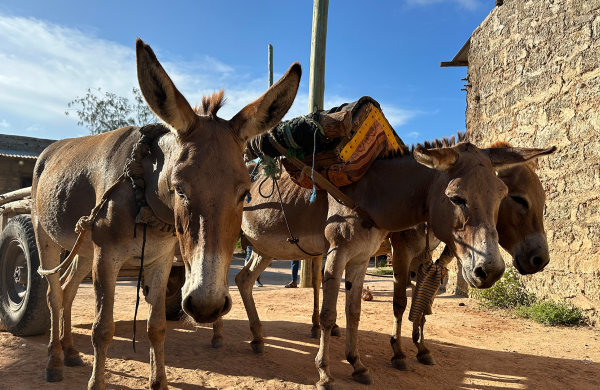
EgyptWe have been working in Egypt since 2003 in partnership with The Society for the Protection and Welfare of Donkeys and Mules in Egypt (SPWDME). Donkeys and mules constitute a major part of the total animal population in Egypt, standing at over 3,000,000. They are used for everyday tasks, including carrying both goods and people. There are also hundreds of brick kilns in the areas where we work and each kiln has between 10-15 donkeys working on site. We are based in Faisal, Giza, 20km southwest of Cairo. From here, we operate our mobile clinics and educational unit throughout the towns and villages of Giza and Kalubia. These include Kenana-Toukh, Kaha, El Desemy, El Saf, Nazlet El Saman, Aouseem, Warden, Abo Ghaleb, Sakara and El Kebabat. Most donkeys we come across suffer with open wounds caused by poor harnessing. Foot problems are also common, along with eye infections and donkeys beaten by their owners. Our teams visit 11 villages and the brick kilns on a regular basis to offer free routine veterinary care and help owners improve the working conditions for their animals. Home for Christmas; a donkey for my wife
By Joe Anzuino - Posted on December 18th, 2012
I am flying back home to my family and The Donkey Sanctuary in Sidmouth. It has been a long 5 weeks visiting our projects in Ethiopia and Egypt but I am returning happy knowing the projects are progressing well. During this time we held a workshop with our overseas vets as well as two of our vets from the UK, in the veterinary faculty near Addis. Brick kiln donkeys benefit from better stables and yards
By Philippa Davies - Posted on August 14th, 2012
Tagged:
Good news from Egypt, where our teams are making great progress in improving conditions for donkeys working in many of the brick kilns near our base at Giza, near Cairo. As well as persuading the people in charge to use better harness and not overload the carts, they‘ve been explaining to the kiln owners that the donkeys – which live on the kiln sites – really need better stabling, and plenty of room, so that they don’t suffer the stress of overcrowding. Our vet Moharam contacted me to pass on his delight that the owner of one particular kiln, which is called Al Gehad, had recently built an external yard for his donkeys – eight years after our team first began visiting the kiln and advising him to do so. A trailblazing new course on harness, cart design and donkey behaviour
By Jenifer Tucker - Posted on February 20th, 2012
In November 2011 the Sanctuary's harness makers from Ethiopia, Egypt and Kenya came together in Ethiopia for a trailblazing new course on harness, cart design and donkey behaviour, pulled together by our amazing harness expert, Chris Garrett. |
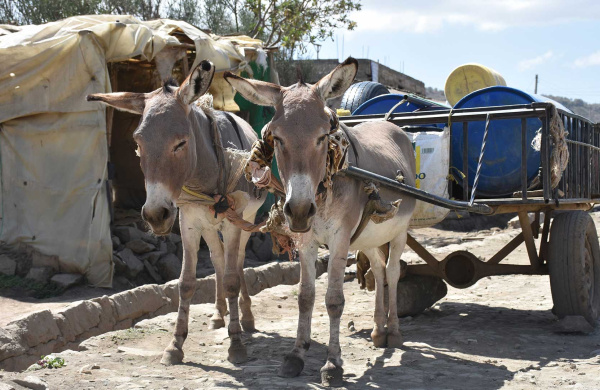
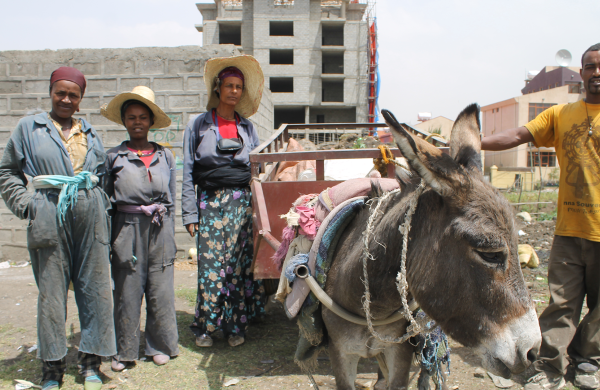
Our project team in Egypt helps working donkeys and their owners in two very different environments – the brick kilns on the outskirts of Cairo, and the rural villages in the Nile delta. The kiln donkeys are used to pull carts laden with bricks to and from the firing ovens. Despite the sweltering heat (well over 30°C) they may work long hours without food, water or rest. Many also suffer pain from abscesses in their hooves and open wounds on their bodies caused by the constant chafing of makeshift, ill-fitting harness. They may be beaten with sticks if they don’t work fast enough for the young boys who drive the carts, who are under pressure from their adult supervisors to get the job done in time. In the rural farming communities along the Nile delta, donkeys have an easier life in some respects. But there, too, they lack basic veterinary care and are plagued by flies and parasites. Hoof abscesses are also common, partly because of poor stabling. In Egypt we have a base in Giza, 20km south-west of Cairo, from which we operate three vet-led mobile units. In both brick kilns and rural villages, these teams use a combination of veterinary treatment, farriery, harness-making, and school and community education to relieve the suffering of the donkeys and encourage their owners to treat them better. They also train the vets serving these communities, to improve their knowledge of donkey medicine. |
About our workIn the late 90s the Donkey Sanctuary decided to help establish and fund a donkey welfare society in Egypt, and by March 2002 the Society for the Protection and Welfare of Donkeys and Mules in Egypt (SPWDME) was up and running. Having started with just one mobile clinic, run by the current project leader Mourad Ragheb and two other people, it now has three vet-led mobile teams who visit many of the brick kilns near the Society’s base at Giza, 20km from Cairo, and many of the rural villages in the Nile Delta. A fourth team of animal health assistants carry out more routine treatments at the brick kilns. We have a farrier and harness maker, both of whom can accompany any of these teams, and an education officer who gives donkey welfare lessons in schools, talks to children in the villages, and also runs workshops for child workers at the brick kilns. |